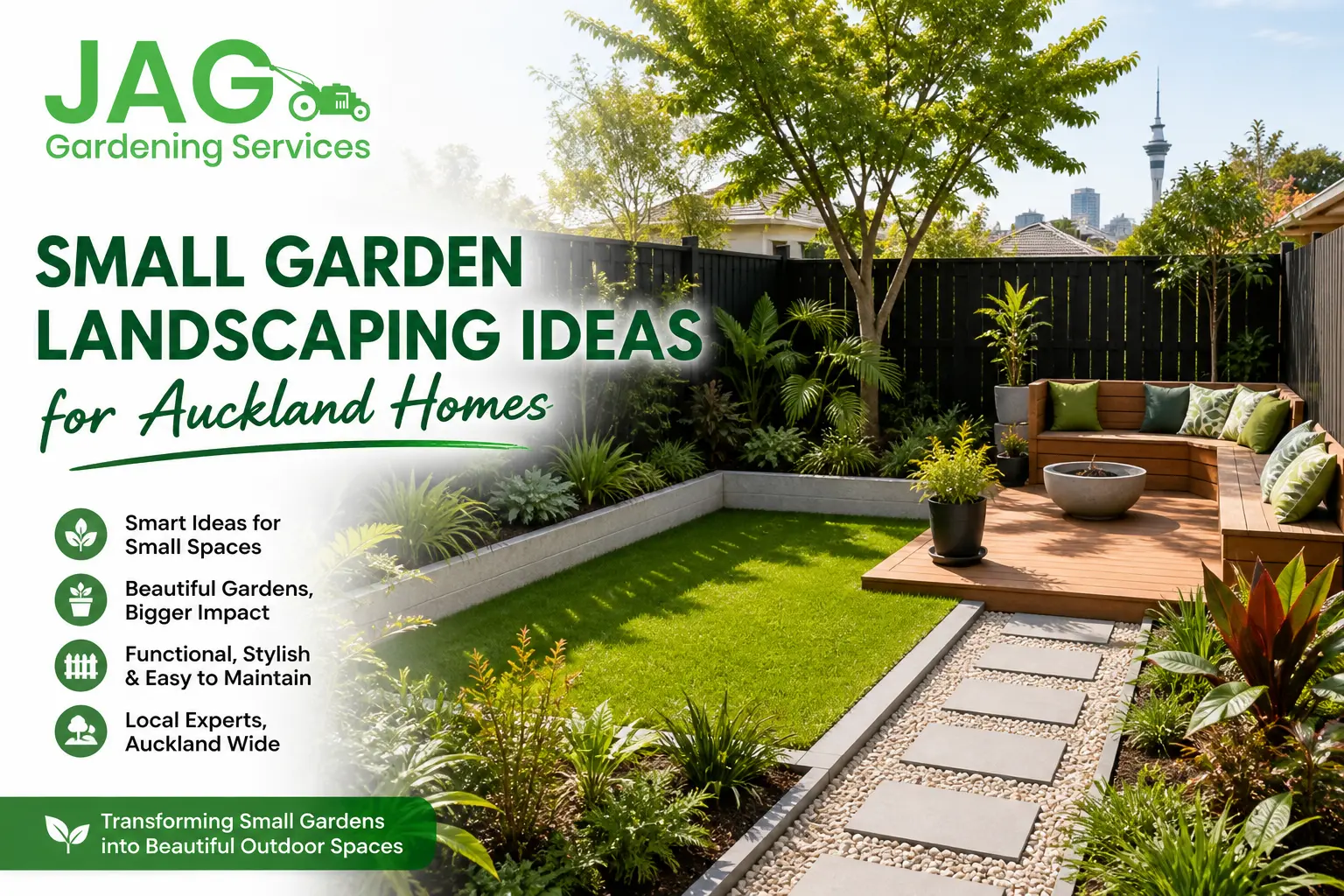
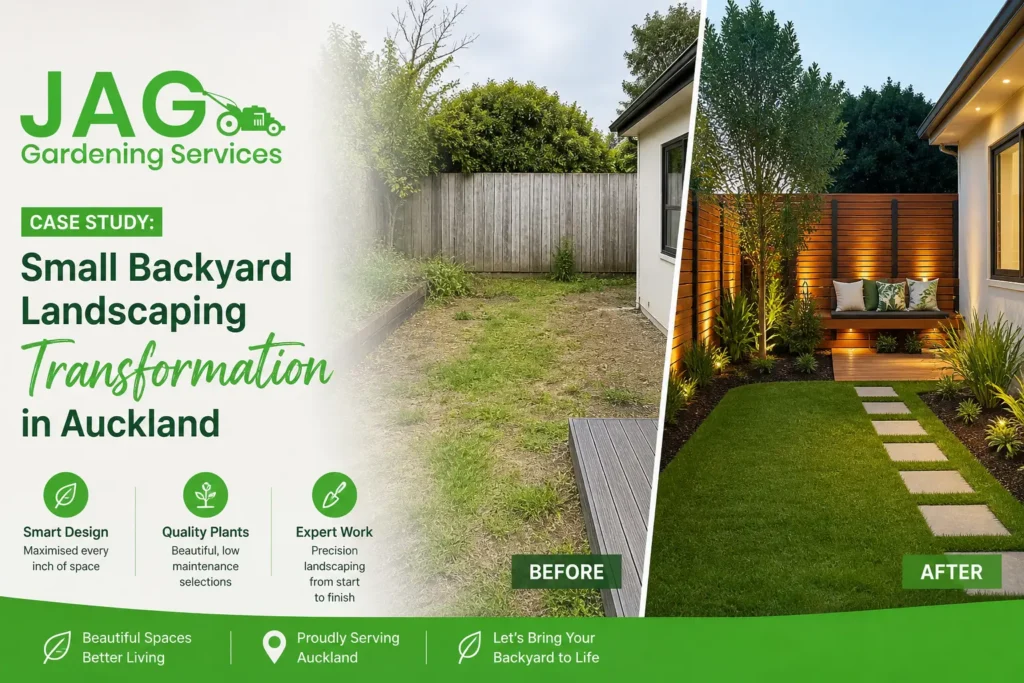
A small Auckland backyard can have enough physical space and still not work. The lawn is too small to use and too large to ignore. Shrubs have grown into each other, one corner collects everything nobody knows where to put, and neighbouring windows look straight onto the seating area. Over time, the garden stops being a place to spend time and becomes something to walk past.
Small backyard landscaping in Auckland is rarely about adding more. A lot of the time, the work comes down to picking what each section of the yard is for. After that, the plan, the planting, and the other bits are done to match the choice.
This case study shows a small backyard redo from start to finish. You will see the issues at the beginning. Then you will see the design choices. You can also follow the logic behind each one. Last, it shows what a solid result can look like when everything is planned well.
Quick Answer
How can a small backyard be transformed through landscaping?
A small backyard can feel better when it is set up well. Start with a simple plan for where things go. Keep the features the right size for the yard. Choose plants that fit the soil and light you have. Make paths and access simple to use. Add privacy where it matters. Also think about upkeep that you can handle in real life.
Trying to add more plants or extra bits usually does not help. If you first decide what you want to use the space for, and then shape each area to match, the whole garden can feel neat and calm. It can even feel bigger than it really is.
The Backyard Before the Transformation
The starting point in this example is a familiar one: a compact residential backyard that has been added to gradually rather than designed as a whole.
- Unclear layout. There is no obvious structure, so the eye has nowhere to settle.
- Unused areas. Corners and side strips serve no purpose.
- Overcrowded planting. Shrubs planted close together have grown into one another and now compete for light and space.
- Limited privacy. The main outdoor area is overlooked, so it goes unused.
- Difficult movement. There is no clear route through the garden, and access to beds and boundaries is awkward.
- Poor balance between lawn and planting. The lawn is a leftover shape rather than a deliberate one.
- Limited outdoor living space. There is nowhere comfortable to sit, eat, or entertain.
None of these problems come from the size of the yard. They come from decisions that were never made, which is why they can be solved without more space.
What Were the Main Landscaping Problems?
Before designing anything, it helps to name each problem and the opportunity it creates.
| Before | Problem | Design Opportunity |
| Plants added over time without a plan | Overcrowded, competing planting | Reduce, reposition and design planting beds with room to mature |
| No defined areas | Space feels cluttered and unused | Create clear garden zones for sitting, growing and walking |
| Awkward route through the garden | Difficult movement and access | Add garden pathways or stepping stones that guide movement |
| Overlooked seating area | Lack of privacy | Use screening plants and layered planting to shield key areas |
| Oversized or awkwardly shaped lawn | Poor balance between lawn and planting | Reshape the lawn area or reduce it in favour of usable space |
| Nowhere to sit | Limited outdoor living | Design an outdoor seating or entertaining area at a suitable scale |
| High upkeep for the size of the garden | Maintenance is hard to sustain | Choose a low-maintenance garden layout and hardy planting |
Each problem changed the design brief. Privacy, for example, meant more than a fence. It meant deciding where people would sit and what stood between them and the neighbours.
The Design Decisions Behind the Transformation
This is where a small backyard makeover succeeds or fails. Each decision below follows the same logic: problem → design decision → why it worked.
1. Creating clear garden zones
Problem: The yard felt like it was only one long, empty strip. It did not seem helpful or inviting.
So I set out to fix that. I broke the space into smaller areas. There is a spot to sit and relax. Another section is for plants. I also kept a small patch of grass. Once that was done, the whole place made more sense. Cutting the yard into sections makes it feel larger than it did before, even if the actual area stays the same.
2. Improving movement and garden flow
Problem: Walking through the garden felt off, especially in spots that were difficult to get to.
I decided to add a straightforward route. I used paths and a few stepping stones to link the areas. This helped because visitors can see where to go. It also keeps people from stepping on the plants. Plus, it makes upkeep simpler.
3. Selecting plants according to site conditions
Problem: Some plants do not fit where they are placed. They can look weak, or they can grow past the space.
The fix is simple. Pick plants based on light, shade, soil type, how fast water drains, and how big they get when fully grown. Do this before you plant. This approach helps because the plants will match their spot from the start. In a small yard, one wrong choice stands out fast.
4. Using layered or vertical planting
Problem: Planting was set only at one level. It looked flat, and the area felt like it had no depth. It also took up too much ground space.
We changed the plan. We stacked plants by height, starting with low groundcovers, then adding mid-size shrubs, and finally taller plants for screening. Where we could, we also used climbing or vertical planting along fences and walls. That approach helped because it created depth and visual interest without using extra floor area. It fit the situation where every square metre matters.
5. Creating a focal point
Problem: The garden did not feel right. Nothing pulled your attention, so it looked spread out.
I chose one main spot to look at. I picked one plant that stands out, or a garden feature placed in a good spot. You can see it from where you usually sit outside. That helped. With one main focus, the layout feels neat. If there are too many standout items, the view gets messy.
6. Improving privacy without making the garden feel smaller
Problem: The seating spot looked out into the open. The screening, though, could fit in a tight area and still block views.
Decision: Put the privacy plants near the main seats. Keep the rest of the yard with a lighter, shorter barrier. Why it worked: The screening was set right where privacy was needed. It did not trap the entire garden in a closed feel.
7. Choosing appropriately scaled features
Problem: Big or wide items can take over a small yard. That leaves less room for walking and living.
Choose the size of seating, paths, planters, and the rest to match the garden. This works because scale makes the whole space feel even. If a feature is a bit too large, it can look wrong. If it fits just right, it feels planned.
8. Designing for manageable maintenance
Problem: A garden that needs constant attention is easy to ignore.
I chose more durable plants, left room for them to grow full size, and kept the paths and edges easy to reach. That combination helps the space stay neat without much extra effort. When plants have breathing space, trimming and cleanup also feel simpler and take less time. After planting, a guide like Garden Maintenance can help you keep it on track.
Choosing Plants for an Auckland Backyard
You will not get one perfect plant for every Auckland backyard. Each place is different, even if it looks similar at first. A warm courtyard that gets sun all day will call for other plants than a narrow shaded area along a wall.
When you pick plants, think about these basics.
- First, check the light. Watch where the sun hits during the day. Also notice how it changes through the seasons.
- Second, look at the soil. Auckland ground can vary a lot from one home to the next. Do not guess. Check what you really have in your yard.
- Drainage matters. Some spots stay damp, so use plants that can handle that. Other areas dry out fast, so choose ones that like quick drainage.
- Look at mature size. A plant that seems small when you buy it may fill a bed after a few seasons.
- Think about the seasons. Watch how your garden changes across the year. If you want options, check Seasonal Planting.
- Privacy plan. Some corners need thicker growth to block views. Other areas should stay open.
- Consider upkeep. Pick plants that match how much time you can spend weeding and caring for them.
Auckland has a mild and damp climate. That kind of weather helps many plants thrive. It can also make plants grow fast. Fast growth can be hard to manage if the space is limited.
A local landscaper understands how things behave here. They can suggest what to plant and how to fit it into your garden. Jag Gardening can help with plant selection and then installing them. If you want details on installation, check Plant Installation. For those who prefer a greener plan, Eco Gardening shares sustainable options too.
The Landscaping Process
A backyard transformation follows a practical sequence. Skipping stages, especially the early ones, is what causes problems later.
- Site assessment. Review sunlight, shade, soil, drainage, access, boundaries, and how the space is currently used. Property access affects both design and construction, particularly in compact urban gardens.
- Design planning. Turn the brief into a layout with zones, movement routes, planting areas and features. This is the landscape planning stage, where problems are cheapest to fix.
- Plant and material selection. Choose plants and hard landscaping materials that suit the site, the design and the budget.
- Garden preparation. Clear unwanted plants, address drainage where needed, and prepare the soil. Good soil preparation supports everything planted afterwards.
- Landscaping and planting. Complete any hard landscaping first, then install planting beds, borders and plants in the planned layers.
- Finishing touches. Add mulch, tidy edges and place final features.
- Ongoing maintenance. Watering, pruning and seasonal care help a new garden establish and keep its shape.
Duration depends on the scope, access, materials and site conditions, so this case study does not attach a timeline to any stage.
The Backyard After the Transformation
The finished garden is not larger, but it works better. A well-planned small backyard typically shows these qualities:
- Improved use of space. Every area has a purpose, and no corner is wasted.
- Clearer zones. Seating, planting, and lawn are distinct and easy to read.
- Better visual balance. Features, planting, and open space are in proportion.
- More suitable planting. Plants are matched to light, soil, and drainage, and have room to grow.
- Improved privacy. The main sitting area is shielded without closing in the whole garden.
- Easier movement. Pathways or stepping stones make the garden simple to move through and maintain.
- More usable outdoor space. There is a comfortable place to sit, eat, or entertain.
- More manageable maintenance. Well-spaced, appropriate planting means less corrective work.
Before vs After — What Changed?
| Area | Before | After |
| Layout | No clear structure or defined areas | Distinct garden zones with a logical arrangement |
| Planting | Overcrowded, unplanned shrubs competing for space | Layered planting suited to the site, with room to mature |
| Privacy | Main outdoor area overlooked | Targeted screening where privacy matters most |
| Outdoor use | Limited space to sit or entertain | A defined, usable outdoor seating area |
| Circulation | Awkward, unclear movement through the garden | Clear pathways or stepping stones |
| Maintenance | Difficult to keep tidy | Simpler, more manageable upkeep |
What Can Auckland Homeowners Learn From This Backyard Transformation?
These tips work for most small garden makeovers:
- First, decide what you want the garden to do. Think about hosting guests, quiet time, growing food, or giving kids a place to play. Then pick plants and extras based on that plan.
- Try to give each part of the yard a job. In a small space, bare ground can feel like wasted room.
- Check how big plants get when they are grown. Use the label for the full height and spread. Do not judge by what you see in the pot.
- Do not pack everything in. A few plants placed well often look better than many plants crowded too close.
- Plan for privacy from the start. Adding screens later is a lot harder than building it into the original layout.
- Look at drainage and how you will move around the space. Water flow matters, and so does having a clear path for supplies, tools, and future care.
- Use planting to shape the area. With beds, borders, and layers, you can mark out separate zones without using hard structures.
- Plan for upkeep from the start. Pick plants and set out the planting in a way you can actually manage and maintain.
If you want more ideas, look at Small Garden Landscaping Ideas for Auckland Homes.
DIY Backyard Makeover vs Professional Landscape Design
A lot of homeowners begin with a DIY plan for the yard. For small fixes, that can be a smart move. The real issue is this: when does a project get too big for DIY?
| DIY Backyard Makeover | Professional Landscape Design | |
| Best for | Simple refreshes and decorative updates | Whole-garden change with several needs to balance |
| Typical scope | Simple planting updates, containers, mulch, small garden-bed refreshes, straightforward decorative changes | Complete layout changes, multiple garden zones, privacy planning, planting design, drainage and access considerations, full backyard transformation |
| Planning | Usually informal | Structured site assessment and design |
| Coordination | You manage each task | Layout, planting, materials and installation are planned together |
Good landscape design matters most when a few needs have to fit in a small area. Those needs can include privacy, places to sit, drainage, plants, and easy care. In a compact garden, every choice changes the next choice. That is why local know-how helps. Look at Landscape Design Auckland to see more.
How Jag Gardening Approaches Small Backyard Landscaping in Auckland
Jag Gardening offers garden and landscaping work around Auckland. We do landscape design and plant installations. For a small backyard, we do not just use the same layout for everyone. We start by looking at your property and how it sits.
That means considering:
- Property-specific design. Every backyard has its own shape, boundaries, and constraints.
- Lifestyle and garden use. How you actually use the space shapes the zones and features.
- Auckland climate and soil conditions. These affect what grows well and how it should be prepared.
- Sunlight and drainage. Both influence layout and plant choice.
- Plant selection. Plants are chosen for the site and their mature size.
- Practical maintenance. The garden is designed to be manageable after installation, with support such as Garden Maintenance available.
The aim is a garden that suits the property and the people who use it.
Frequently Asked Questions
The cost of small backyard landscaping in Auckland depends on the scope of the project, so there is no single figure. Key factors include access to the property, the materials chosen, the amount of planting, any structural or drainage work, and general site conditions. A simple planting refresh costs far less than a full layout change. The most reliable way to understand cost is to discuss your requirements and have the site assessed.
Clear zoning, layered planting, and a simple layout make a small backyard feel larger. Avoid clutter, choose features in proportion to the space, and use a focal point to draw the eye. Pathways guide movement and add a sense of depth. Restrained, purposeful planting generally works better than filling every gap.
Start with how you want to use the space, then look at sunlight, shade, soil, drainage, access, and privacy. Consider the mature size of any plants and how much maintenance you can manage. Thinking about these together before you begin helps avoid costly changes later.
It can be, particularly when several needs must fit into limited space. Professional design is most useful for full layout changes, multiple zones, privacy planning, and drainage or access considerations. For simple updates such as containers or mulch, a DIY approach is often enough.
It depends on the site, so no single plant list suits every garden. Suitable plants match the available sunlight, soil and drainage, and have a mature size that fits the space. Privacy needs, seasonal interest, and maintenance also matter. A professional site assessment helps narrow the choice for your property.
The duration depends on project scope, access, materials, planting, structural work, and site conditions. A small planting update takes far less time than a full transformation involving hard landscaping and drainage. A realistic timeline is best confirmed after the site is assessed and the design is agreed.
Yes, landscaping can include planting, and garden maintenance can follow once the garden is established. Maintenance helps new plants settle and keeps the design in shape through the seasons. Discuss both when planning so the garden is designed to be manageable from the start.
Yes, Jag Gardening provides gardening and landscaping services across Auckland, including landscape design and plant installation. You can discuss your backyard, how you want to use it, and any concerns about privacy, planting, or upkeep.
Ready to Transform Your Auckland Backyard?
If your backyard feels like it is not working for you, you do not need to solve everything first. Maybe it feels too tight, or it takes too much time to keep up. You can call Jag Gardening and explain how you use the yard. Tell them what seems to be getting in the way. Then share what you would like to adjust. You do not have to agree to a full job right away. A simple chat can be all it takes to show what can be done.