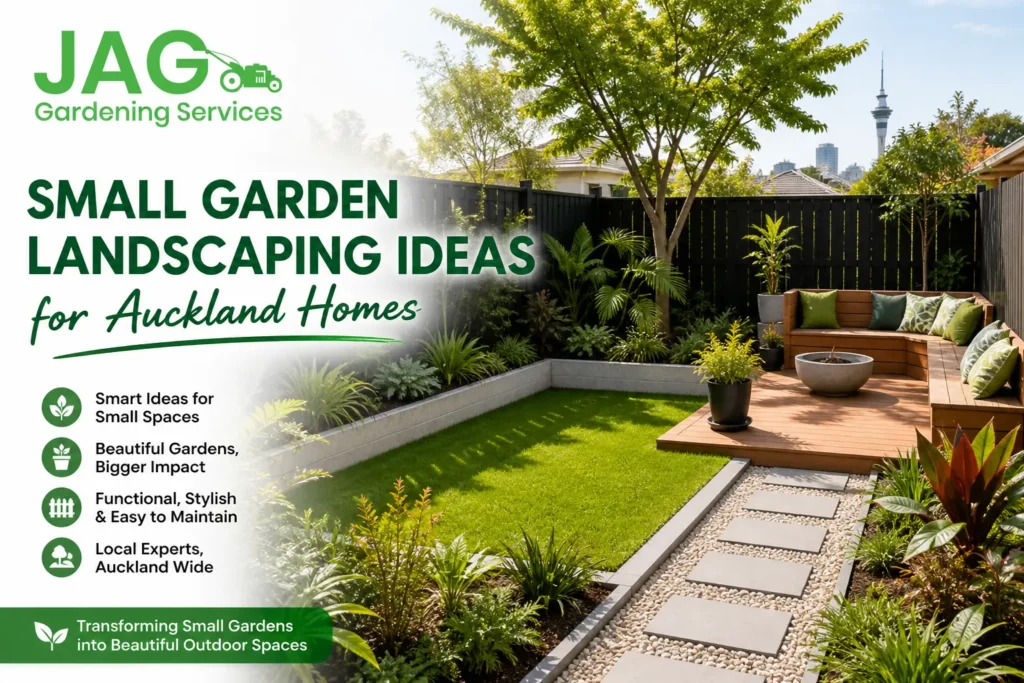
A small garden brings its own set of problems. Most yards have a place for planting, a place to relax, a spot to keep the bins or the mower, and maybe a small area for hosting friends. All of it has to fit into the same limited stretch of ground. Then you add the need for some privacy from the people next door. After that, it makes sense that small gardens can end up looking messy instead of feeling good to use.
The better side is this: a smaller garden can still work well without taking up extra space. It needs a layout that’s been thought through one where every part of the space has a job to do, the planting suits the site, and nothing is trying to do too much at once. That’s the difference between a small garden that feels cramped and one that feels considered.
This article works through practical small garden landscaping ideas for Auckland homes, explains why each one suits a compact space, and looks at how to tell when a DIY weekend project is enough and when professional landscape design starts to add real value.
Quick Answer
Small garden landscaping in Auckland can work well when you use vertical planting and stacked planting beds. It also helps to create clear areas for each part of the garden, since space is tight. Keep features the right size for the yard. For example, you can add a bench that sits along a planted section instead of taking up extra room. Pick plants that fit the site and need less care, so the garden stays usable. Done this way, the space feels larger and does more, even though you did not add any extra land.
What Makes a Good Small Garden Design?
Good small garden landscaping in Auckland usually shares a few common traits, regardless of the property’s style or the plants involved.
It has a clear purpose. A garden trying to be an entertaining area, a play space, a vegetable patch, and a privacy screen all at once will usually satisfy none of those needs properly. Deciding what matters most — and what can be secondary — is the starting point.
It’s built at the right scale. Features sized for a large section (oversized paving, big specimen trees, large outdoor furniture) tend to overwhelm a small footprint rather than enhance it.
The layout is efficient. Paths, beds and open areas need to relate to each other logically, so the garden is easy to move through and doesn’t waste space on awkward gaps.
The planting suits the site. Plants chosen for the actual sunlight, soil and drainage conditions will perform better and need less correcting later.
Access is practical. Gates, paths and gaps between beds need to be wide enough for how the space is actually used — including maintenance access.
Maintenance is manageable. A garden that looks good on installation day but needs constant attention to stay that way isn’t well suited to most households.
| Design Principle | Why It Matters in a Small Garden |
| Clear purpose | Prevents the space from trying to serve too many functions at once |
| Appropriate scale | Oversized features make a small area feel even smaller |
| Efficient layout | Reduces wasted or awkward space |
| Suitable planting | Plants that match the site need less ongoing correction |
| Practical access | Keeps the garden usable and easy to maintain |
| Manageable maintenance | Keeps the garden looking good long-term, not just after installation |
12 Small Garden Landscaping Ideas for Auckland Homes
1. Use Vertical Space for Planting
In a small garden, the ground is the most contested resource. Vertical planting — trellises, wire framing on fences, wall-mounted planters and climbing plants — adds greenery and screening without using any additional floor area.
How to use it: A trellis against a boundary fence can carry a climber that softens a hard surface and adds privacy at the same time. Wall-mounted or hanging planters work well on courtyard walls where garden beds aren’t practical.
What to consider: Climbers need something sturdy to climb on, and some will need support fixed before planting rather than after. Fence and wall condition should be checked first, since a heavier climber can put strain on an ageing structure over time.
2. Create One Strong Focal Point
Small gardens often try to include several “feature” elements: a sculpture, a specimen plant, an outdoor seat, a water feature, all in the same limited space. The result is usually visual competition rather than impact.
Why it works: One well-placed focal point gives the eye somewhere to rest and makes the whole garden feel more deliberate, rather than busy.
How to use it: This could be a single well-formed feature plant, a distinctive planter, a simple seating nook, or one considered garden feature positioned where it will naturally be seen at the end of a path, or opposite the main viewing point from inside the house.
What to consider: The focal point should suit the scale of the garden. An oversized feature can dominate a small space just as easily as clutter does.
3. Use Layered Planting to Create Depth
Use layered planting in a long, narrow bed. Put low plants in front, then add mid-size shrubs, and finish with taller plants in the back. This simple layout helps the area look deeper.
It works in tight spaces because “depth” is mostly what you see. When layers are stacked by height, the bed looks fuller. It can feel more settled than one straight line of plants, even if the space is the same size.
How to use it: plan the height order. Taller plants should go at the rear or near a fence line. The middle layer goes where you will look most often. Keep the low plants and groundcover at the front edge near a path or the lawn.
What to consider: Layering only holds up if each group gets enough sun. If you place tall plants too close to the front, they may block the light and leave smaller plants struggling.
4. Choose Plants for the Actual Site
It can feel easy to copy a generic “best plants for Auckland” list, but the right plants depend on what your place is like. You need to look at the light you get each day, where shade lands at different times, what the soil is like, how water moves through it, and how much room the plant will need later.
This matters even more in a small garden. When space is limited, a wrong pick shows up fast. If you put a shrub in the wrong light, or it grows too wide for the spot, you end up trimming and constantly fixing it. It stops being a nice feature.
Start by watching the yard. See how sun and shade shift through the day. After rain, check if water sits or if it sinks in. Also, judge the mature size, not the size you buy in the pot.
Getting this right from the outset is far easier than correcting it later, which is where professional Plant Installation support can be useful, matching plant choice to the site’s actual conditions rather than a generic list.
5. Make Garden Paths Work Harder
Garden paths do more than link one spot to another. They shape small areas, tell people where to go, and give the whole yard a clear layout.
This is why it helps. With a path that is easy to see, the garden does not feel like one blank sheet of grass and plants. People know where to step, and the path also marks the edges of different spots. You can do that without adding fences or solid walls.
How to set it up. Use stepping stones inside a planted bed, so the walk feels like a slow route through the greens. Or make one clear line from the gate or door to a seat so visitors can move without detours.
What to consider: It is simple to cover too much ground with paving just to cut down on upkeep. If you add too much hard surface, the yard can feel tight. It may also look less alive and less green. Paths work best when they’re sized for their actual purpose, not wider than necessary.
6. Combine Seating and Planting
Rather than allocating separate areas for seating and garden beds, integrating the two lets one part of the garden do double duty.
Why it works in a small garden: Space is at a premium, so a seat positioned within or alongside a planting bed rather than on a separate paved area avoids duplicating space for two purposes.
How to use it: A built-in bench along a boundary, backed by planting, or a small seat tucked into a garden corner, can provide a place to sit without requiring a dedicated patio.
What to consider: Think about what the seat will look and feel like, to use shade at different times of day, proximity to path traffic, and whether planting nearby will eventually encroach on the seating area.
7. Use Screening Without Making the Garden Feel Smaller
Privacy is a common priority in small Auckland gardens, particularly where properties sit close together. The challenge is achieving it without the screening itself closing the space in.
Why it matters: A solid, oversized screen can solve the privacy problem while creating a new one — a garden that feels boxed in.
How to use it: Trellis panels with climbers, semi-transparent screening, or well-placed privacy planting can filter views without a solid wall effect. Screening can also be positioned selectively — around a seating area, for example — rather than around the entire boundary.
What to consider: Screening height and density should be matched to what’s actually being screened (a specific window or sightline, rather than the whole garden), and to how much light the space can afford to lose.
8. Use Containers in Courtyards and Compact Gardens
Containers let you change things up in ways that in-ground beds do not. This helps a lot in courtyards, patios, and gardens where you cannot easily dig into the ground.
Why people like it: You can pick up the pots and move them later. You can also swap them out for a new season. If your needs change, the layout can shift without tearing up anything.
How to set it up: Try mixing pots of different heights so the plants look layered, like they would in a planted bed. Another option is to use a few big pots in key spots, instead of lots of small ones spread everywhere.
What to consider: If you use too many different containers, the area can start to look messy instead of neat. Fewer, well-chosen containers, consistent in material or colour, tend to read as more considered.
9. Choose Low-Maintenance Planting
“Low-maintenance” is often used loosely, but it has a specific meaning in practice: plants and layouts that don’t require constant intervention to stay presentable, not gardens with no upkeep at all.
Small plots can feel easier to manage. You can see issues and good results sooner because everything sits close. In a cramped yard, a sick plant or a messy bed stands out right away.
How to use it: Select plants suited to the site’s actual conditions (see idea 4), apply mulch to reduce watering and weeding, and keep bed shapes simple rather than intricate.
What to consider: Even low-maintenance planting benefits from periodic attention, pruning, mulching top-ups, and seasonal tidying. Ongoing Eco Gardening practices, such as mulching and considered watering, help keep maintenance manageable without relying on chemical intervention.
10. Create Multi-Purpose Garden Zones
Rather than trying to fit separate areas for every function, small gardens tend to work better when zones are designed to serve more than one purpose.
Why it works: It reduces the number of distinct “areas” competing for the same footprint.
Examples:
- A seating area that also functions as the main entertaining space
- Planting that provides both greenery and privacy screening
- A pathway that also contributes to the garden’s visual structure
- A lawn area that doubles as space for children to play, where the section allows
How to use it: Identify which functions genuinely need dedicated space and which could reasonably share an area, then design the layout around those combined zones rather than a list of separate features.
11. Keep Features Appropriately Scaled
Oversized furniture, paving, plants, or structures are one of the most common reasons a small garden feels smaller than it actually is.
Why it matters: A large outdoor dining setting, an oversized specimen tree, or an expansive paved area can dominate a compact garden, leaving little room for anything else and making the space feel cramped rather than generous.
How to use it: Choose furniture and features sized for the actual area available, and leave some breathing room around them rather than filling every available metre.
What to consider: It can help to physically mark out a proposed feature’s footprint with tape or stakes before committing, to get a realistic sense of how much space it will actually take up.
12. Design for How the Garden Will Mature
A garden photographed on installation day rarely looks the same a few years later. Plants grow, screening thickens or thins, and garden beds fill in — for better or worse.
Why it matters in a small garden: There’s less margin for error. A shrub or tree that outgrows its allocated space in a small garden will need far more frequent pruning, or eventual removal, than the same plant in a larger section.
How to use it: When selecting plants, consider their mature size and spacing needs — not just how they look at the time of planting — and leave enough room between plants for that eventual growth.
What to consider: Growth habits and rates vary significantly between species and site conditions, so it’s worth checking mature size and spread for each specific plant being considered, rather than assuming.
How Do You Make a Small Garden Look Bigger?
A small garden can be made to feel larger through layout and planting choices, without any change to the actual boundary. Clear sightlines, vertical and layered planting, fewer competing features, and consistent materials all contribute to a more spacious feel.
Practical checklist:
- Keep at least one clear sightline through the garden, rather than blocking every view
- Use vertical planting to add greenery without taking up floor space
- Layer planting for depth rather than spreading everything at one height
- Choose one main focus, or keep it to two.
- Use one paving style and one edging style. Do not combine lots of types.
- Pick furniture that matches the size of the area. Keep walk paths open around it.
- Show garden zones clearly, so the yard does not feel like one big flat field.
- Include at least one feature that looks set in place on purpose, not left to chance.
What Should Auckland Homeowners Consider Before Landscaping a Small Garden?
Auckland homes can feel very different from block to block, even when they are in the same suburb. Before you change anything, it helps to check a few basic things.
First, look at light. The direction of the site matters, but so do nearby houses, fences, and older trees. These can block the sun at parts of the day and also change things across the seasons.
Soil conditions: Soil type and how healthy it is will decide what grows well. It can also tell you if you will need extra work in a garden bed before you plant.
Then, think about water flow. After rain, see how quickly the area dries. If water sits for long, you may need different plants or some simple groundwork before planting.
Plant suitability: As covered earlier, plant choice should be based on the specific conditions of the site rather than a general list.
Garden access: How materials, plants and equipment can get into the garden affects what’s practical to install and maintain.
Maintenance requirements: Some layouts and plant choices need more regular attention than others — worth weighing against how much time is realistically available.
How the space will actually be used: A garden designed around entertaining will look different from one designed primarily for planting or privacy.
Because these factors differ from property to property, a landscaping approach that works well for one Auckland garden won’t necessarily suit another with different light, soil or access conditions even nearby.
Small Garden Landscaping Ideas Based on Your Space
Different types of small outdoor spaces tend to benefit from different approaches, depending on their shape, exposure and typical use.
| Garden Type | Useful Landscaping Approach |
| Small backyard | Zone the space for a clear primary purpose (entertaining, planting, or play), and use layered planting along boundaries for privacy and depth |
| Courtyard | Lean on containers, vertical planting, and wall-mounted greenery, since ground planting space is often limited or absent |
| Narrow side garden | Use it as a transitional path space with simple, low-maintenance planting rather than trying to fit multiple features into a tight strip |
| Small front garden | Prioritise street appeal and clear access, with planting that frames the entrance rather than obstructing the path |
| Compact entertaining area | Combine seating and planting into one zone, and keep paved space matched to actual furniture needs rather than over-paving |
These are starting points rather than fixed solutions — the right approach for a specific garden will depend on its orientation, size, and how the household intends to use it.
Small Garden Landscaping Mistakes to Avoid
A few recurring issues tend to hold small gardens back from reaching their potential.
- Overcrowding plants — planting too densely at installation might look full initially, but competition for light and space follows quickly
- Ignoring mature plant size — a plant that looks modest at purchase can outgrow a small bed within a few seasons
- Using too many materials — mixing several paving types, edging styles, or wall materials can make a small space feel busy and disjointed
- Oversized furniture — seating and tables scaled for a larger area leave little room to move or plant around them
- Poor access — paths and gaps too narrow for actual use (including maintenance access) create ongoing frustration
- Ignoring drainage — poorly draining areas can undermine plant health and damage nearby hard surfaces over time
- Too much lawn — a large lawn area in a small garden can leave little space for anything else, and may not suit the way the space is actually used
- Designing without maintenance in mind — a layout that looks good on day one but is impractical to maintain tends to decline quickly
None of these are irreversible, but they’re easier to avoid at the planning stage than to fix afterwards.
DIY Small Garden Landscaping vs Professional Landscape Design
Not every small garden project needs professional input. The right approach generally depends on how many problems the project needs to solve at once.
| DIY | Professional Landscape Design |
| Simple planting updates | Complex layout changes |
| Small decorative changes (pots, mulch, edging) | Multiple functional zones working together |
| Refreshing existing beds | Privacy planning across the whole property |
| Adding individual plants | Considered plant selection matched to site conditions |
| Minor path or seating tweaks | Drainage and access considerations |
| — | Full garden transformation |
DIY tends to suit straightforward, single-purpose changes — refreshing a tired bed, adding containers, or making small decorative updates that don’t affect the underlying layout.
Professional landscape design tends to add more value when several requirements need to work together at once — for example, privacy, seating, planting, and access all needing to be resolved in the same limited footprint, or when drainage and site conditions need to be factored into the plan from the start.
When Is Professional Landscape Design Worth It for a Small Garden?
Professional input isn’t necessary for every small garden — but it becomes more useful in certain situations.
It’s often worth considering when:
- The current layout feels awkward or doesn’t flow well
- The space needs to serve several competing uses at once
- Privacy is a priority but hasn’t been easy to achieve with simple planting
- Plant selection feels difficult given the site’s specific light, soil, or drainage conditions
- A genuinely low-maintenance outcome is the goal, rather than one that looks good briefly
- Drainage or access issues need to be factored into the design
- The garden needs a more complete redesign rather than incremental changes
- The aim is a cohesive result, rather than a collection of individual updates made over time
At Jag Gardening, landscape design is approached around the property, the way the space is used and the homeowner’s goals — rather than applying a standard layout to every garden. For small gardens in particular, where every metre needs to earn its place, this kind of considered landscape design can help resolve competing requirements in a way that ad-hoc changes often can’t.
How Plant Installation Fits Into a Small Garden Design
Plant installation works best when it follows the design and the site’s actual conditions, rather than being decided independently of them.
This means considering:
- Plant selection matched to the site’s sunlight, shade, and soil conditions
- Spacing that allows for each plant’s mature size, not just its size at planting
- Sunlight and soil requirements specific to each species
- Seasonal timing (Seasonal Planting), since some plants establish better at certain times of year
- Mature size, to avoid future overcrowding or the need for early replacement
Getting the sequence right — design first, then plant selection, then installation — tends to produce a better long-term result than choosing plants first and fitting them into a layout afterwards. Considered Plant Installation takes these site-specific factors into account from the outset.
How to Keep a Small Garden Easy to Maintain
A garden that’s simple to maintain is usually one designed with maintenance in mind from the beginning, rather than one that becomes low-maintenance by accident.
- Choose appropriate plants suited to the site, so they don’t need constant correction
- Keep layouts simple — fewer intricate bed shapes and edges mean less trimming and edging work
- Apply mulch to help suppress weeds and retain soil moisture
- Make beds accessible, so they can actually be reached for weeding, pruning and general care
- Avoid excessive lawn edges, which tend to be one of the more time-consuming parts of garden upkeep
- Plant at sensible density, allowing for growth rather than needing early thinning
- Factor in regular maintenance, since even a well-designed garden benefits from periodic attention
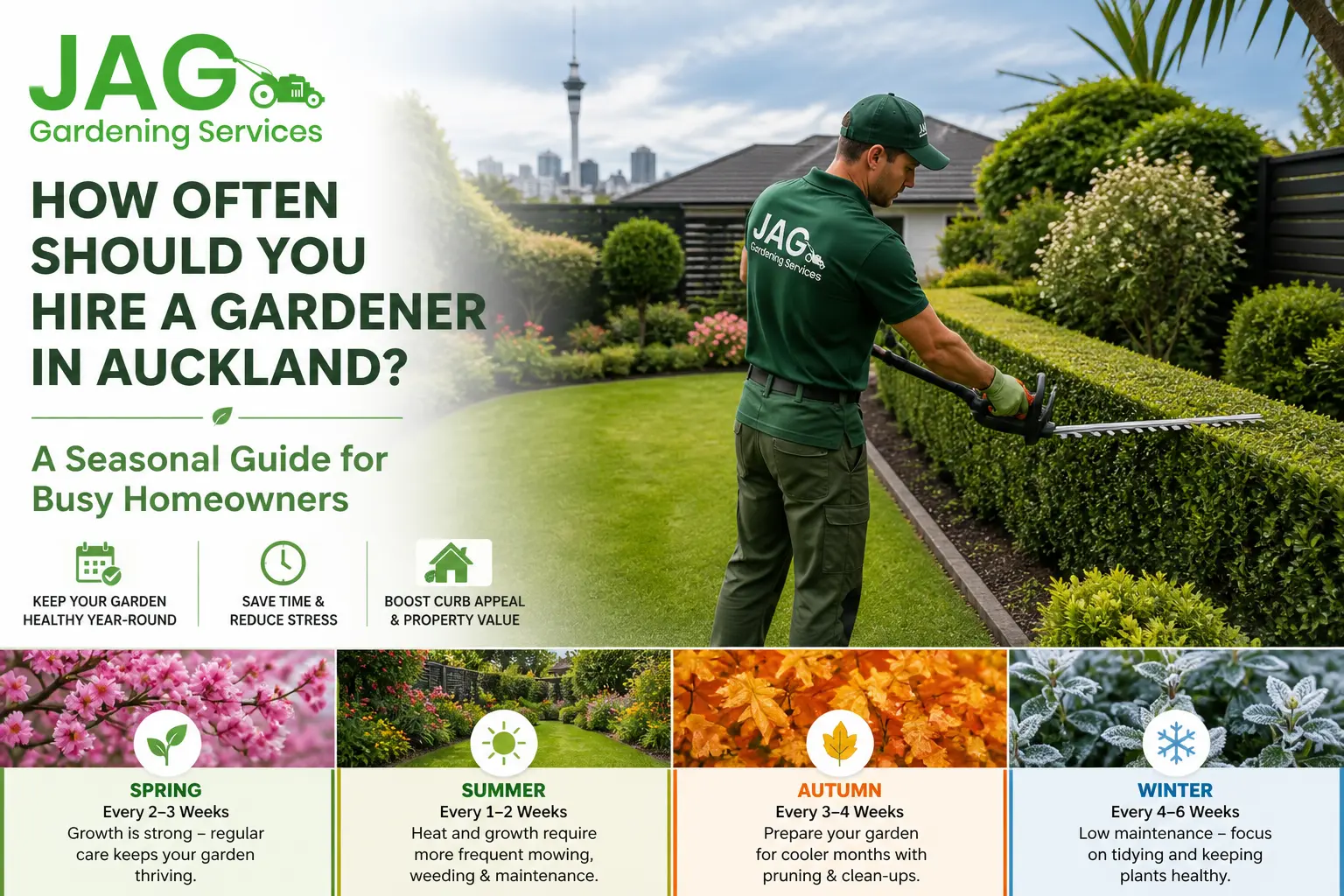
Consistent Garden Maintenance — even at a modest, regular level — tends to keep a small garden looking good for longer than infrequent, larger clean-ups. If you’re weighing up how often that upkeep should happen, How Often Should You Hire a Gardener in Auckland? covers the factors worth considering.
Frequently Asked Questions
The most effective approaches use vertical planting, layered garden beds and clearly defined zones to make the most of limited ground space. Combining functions such as seating built into a planting area, and keeping features appropriately scaled also helps a small garden feel organised rather than crowded.
A small garden can look bigger through clear sightlines, layered and vertical planting, consistent materials, and appropriately scaled furniture. Limiting the number of competing focal points and defining separate zones also helps the space feel more spacious without changing its actual size.
Suitable plants depend on the specific site’s sunlight, shade, soil, and drainage conditions rather than a fixed list. Considering each plant’s mature size and how it fits the available space is also important, since the right choice for one Auckland garden may not suit another with different conditions.
A low-maintenance small garden generally combines plants suited to the site, simple bed shapes, mulching, and sensible planting density. Low-maintenance doesn’t mean no maintenance — it means a layout and plant selection that don’t require frequent, intensive intervention to stay presentable.
It depends on the scope of the project. Simple, single-purpose updates are often suited to DIY, while gardens needing to resolve several requirements together, such as privacy, seating, planting, and drainage, tend to benefit more from professional design input.
Cost varies depending on the scope of work, materials chosen, site access, design complexity, and specific site requirements such as drainage or existing conditions. Because these factors differ from project to project, a general figure wouldn’t reflect any individual garden’s actual costs.
Yes, combining seating and planting into one zone is a common and effective approach in small gardens. A seat integrated within or alongside a planting bed allows one area to perform two functions, rather than allocating separate space to each.
Plant choice should start with the site’s actual sunlight, shade, soil, and drainage conditions, followed by each plant’s expected mature size and maintenance needs. This site-first approach tends to produce better long-term results than selecting plants based on appearance alone.
Final Thoughts: Make More of the Space You Already Have
A small garden doesn’t need more land to become genuinely functional and attractive; it needs a layout that reflects how the space will actually be used. Getting the scale of features right, choosing planting suited to the site, and thinking about maintenance from the outset all make a bigger difference than the size of the section itself.
Some of this can be achieved through straightforward DIY changes. Other projects, particularly those juggling privacy, seating, planting and access all in the same limited footprint, tend to benefit from a more considered, professional approach that brings those requirements together into one cohesive plan.
Ready to Make More of Your Small Garden?
If you’ve got a compact garden, courtyard or awkward outdoor area and aren’t sure where to start, it’s worth talking through your goals with Jag Gardening. As specialists in small garden landscaping, Auckland homeowners can expect a design approach around their property and how they intend to use the space, helping you get more from the garden you already have.